Brand Positioning for B2B Manufacturers.
Brand positioning for manufacturers is the decision about which buyers you serve, why you cost more, and how you prove it. Wit & Craft repositions owner-led B2B manufacturers whose product is better but whose sale still comes down to price. Positioning takes about a month, the full brand package about three, and the price is on this page.
Your Product Is Better.
The Conversation Is Still About Price.
Quality, price, and delivery still win procurement decisions, and no brand changes that. Brand decides something earlier. It decides whether you are on the bid list at all, it makes your quality legible to a buyer who will never walk your floor, and it keeps price from being the only column. Competing head-on with bigger plants on volume and price is a game a smaller maker loses by default. The way out is a position the big players cannot copy, aimed at the buyers who care about more than the number. The full playbook is in our guide on how to stop competing on price in B2B. For job shops and contract manufacturers specifically, see how contract manufacturers differentiate when everyone has the same machines.
Your engineering is tighter. Your quality control catches what competitors miss. And every sales conversation still opens with the same question. What's your price? That is the commodity trap, and the product did nothing to cause it.
Here is how a better shop ends up there. Your competitors run the same machines. They hold the same certifications, quote to the same drawings, and ship to the same tolerances, because the customer's spec sheet demands it. When every bid on the purchasing manager's spreadsheet reads the same, the spreadsheet does the choosing, and the only column left is price.
What positioning means for a manufacturer
Positioning is five decisions, made in order and written down so the whole company can repeat them.
Segment. The customers you serve better than anyone else, chosen from the ones who are already your most profitable and most satisfied, and named specifically enough that a rep knows who to call and who to let go.
Differentiator. The one thing you do that competitors structurally cannot, because of how your shop is built, who runs it, or what it has spent twenty years learning.
Proof. The evidence behind the differentiator, gathered and organized so a buyer can check it. Tolerances held, dates hit, requalifications passed, the customer who has stayed for a decade.
Category. The market you compete in, defined on your terms, so you are compared with the right rivals instead of every shop with the same equipment list.
Message. The sentence your sales team, your reps, and your website all say the same way, and the identity that carries it.
Most manufacturers have a version of the last one and none of the first four. That is why the message does not land. A claim with no decision underneath it never does
How repositioning works here
We start by taking the brand apart. Who actually buys from you, which customers are the most profitable and the most satisfied, what your competitors say about themselves, and what you do that they cannot. Then we rebuild it into a position built to win the segment that values you most. The work runs weekly, with the owner in the room, because the decisions are the owner's to make. We keep the project moving between calls.
If a full rebrand is on the table, including a new name or a new look, our guide to rebranding a manufacturing company covers when to do it, what it costs, and what to fix first.
Every engagement covers the full spine of repositioning work, and each step leaves something on the table you can use.
Competitive analysis across your real market, including the bigger players you should not fight head-on. You get a map of who claims what, and the ground nobody has taken.
A target segment where your strengths command a premium. You get a named segment, the reasons it pays more, and the accounts you already hold that prove it.
Your core differentiator, named and sharpened. You get the one sentence that separates you, tested against every competitor on the map.
The proof behind the differentiator, gathered and organized. You get the evidence file, with the numbers in it, that backs the claim.
A market category you can own instead of renting someone else's. You get the category definition and the language that goes with it.
Positioning, messaging, and identity built to reach that segment. You get the messaging matrix your sales team and reps work from, and in the full package, the identity system and the launch plan.
A strategic positioning document your sales team can use on Monday morning. You get the document itself, the thing the rest of your marketing hangs from.
What it looks like when it lands
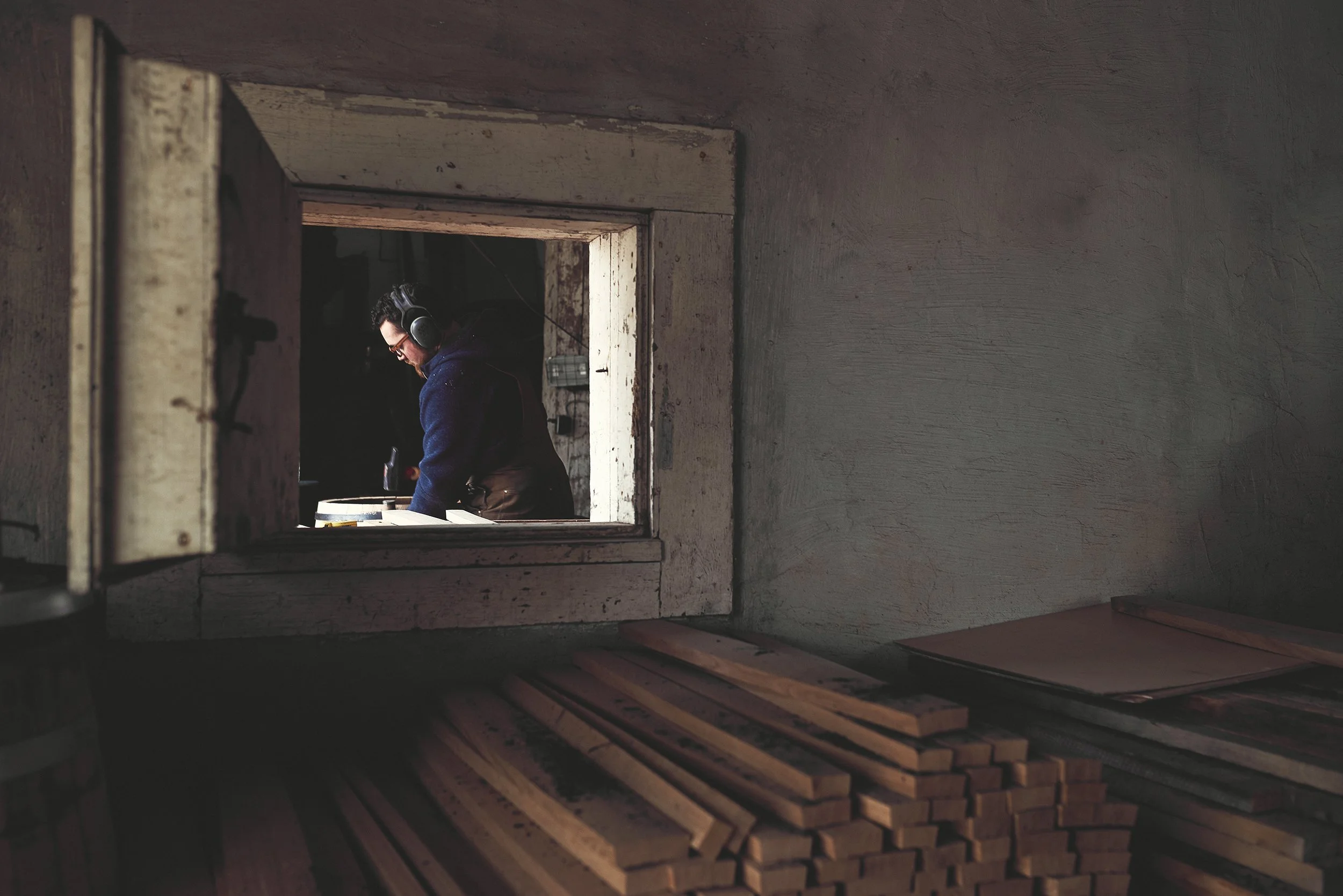
Croze Nest is an artisan barrel maker. It came to us set up to compete with large barrel factories on their terms, and on volume and price a workshop loses to a factory every time. We repositioned the brand away from the volume game and toward craft and micro-distillers, the market the giants ignored, because those distillers care about who coopers their barrels. That insight became the brand's WHY statement.
Croze Nest grew from selling one barrel to one customer to handcrafting more than 500 custom barrels a year, with orders placed well into the next year. It never got cheaper, faster, or bigger than the factories. It got clearer about who it serves and why that matters. The full story is in the Croze Nest case study. The same process, in a different trade, took an interior designer from imposter syndrome to a competitive win in four months. That case study on differentiating a service business shows the steps.
"We exist to help make the best bourbons for craft & micro-distillers."
The WHY statement behind Croze Nest's repositioning away from fighting barrel factories, toward the craft distillers the giants ignored.
This is for you if
You run an owner-led B2B manufacturer, roughly $5 million to $50 million in revenue and 20 to 150 people. Founder-led, family-owned, or newly acquired, with the owner in the room for the work.
Your product is better than your win rate. The quality is real and the sale still comes down to price.
The brand has to start carrying more than the founder's reputation. You are the new owner in the first year, the next generation taking over, or a founder two to five years from an exit who wants the company to be worth more than its customer list.
You are a contract manufacturer, a job shop, or a maker of a product line, including the ones that sell through reps and distributors.
"It just wasn't good for the brand."
The owner, turning down a buyout offer after growing from selling 1 barrel to 1 customer to handcrafting over 500 custom barrels per year.
This is not for you, and we will say so on the call, if
You need leads by Friday. Demand generation is a different purchase, and the industrial pipeline agencies do it well.
You want to hand this to a marketing coordinator and check back in a quarter. This work is done with the owner, and it does not survive delegation.
You are listing the company for sale within the year. Change nothing visible before a sale. If you are two to five years out, that is a different conversation, and it belongs with your exit planner as much as with us.
Revenue is under roughly $2 million. The problem is real and the budget usually is not. Start with the guides on this site, beginning with the commodity trap, and come back when the work will pay for itself.
The shop misses dates or ships rework. Positioning sharpens what is defensibly different, and it cannot brand a delivery problem into a premium. Fix the floor first.
Who this is for, and who it is not for
Is positioning your problem? Six questions.
Answer yes or no.
Do your competitors run the same machines and hold the same certifications you do?
Does your website describe your equipment list better than it describes your customer?
Would two people on your sales team give different answers to “why should we pay more for you?”
Do your most profitable customers look different from the customers your marketing attracts?
Do you win the jobs where the buyer visited the floor and lose the ones decided from a spreadsheet?
Have you lost work to a competitor whose product you know is worse, but whose story was better?
Four or more yeses and positioning is the constraint, whatever else is also true. That is worth thirty minutes on a call to confirm.
What it costs and how long it takes
Almost nobody in this category publishes a price. Ours is here, because an owner with a budget and a date should not have to book a call to find out whether the work fits. Positioning takes about a month. Positioning through a full identity system takes about three months. If the identity is the part you need, on its own or on new positioning, that work is on our rebranding for manufacturing companies page.
Brand Foundations
The full brand package, covering positioning, messaging, identity design, and a launch plan.
$40,000
If you only need the positioning,
we scope it on a call.
Executive Brand Coaching
For the owner whose year-one cash is committed to the business, Executive Brand Coaching runs the same positioning work weekly, with you.
$1,500/mo.
month to month, with no minimum.
What moves the number at any firm is scope. Whether the name changes, how many product lines the brand has to carry, and how much old-brand material is already in the pipeline. The rebrand guide walks through each one, and it lists what the agencies that do publish ranges charge, which sits well above this. If you would rather hire a person than buy a package, the weekly engagement is described on our brand strategy consultant page.
Book a Call
Thirty minutes. Bring the price objection that ends the most quotes, the three accounts that are the business, and the last agency story if there is one. We will tell you whether positioning can beat the objection, roughly what it would cost, and whether you should wait. If the honest answer is a pipeline agency or an operations fix, you will leave with a name. No pitch deck, and no proposal you did not ask for.
What clients say
“Wit & Craft didn't just help me build my brand. They helped transform my business. I never make any decisions without considering how it will further the Croze Nest brand.”
Joe Smith, Croze Nest
“Wit & Craft excels in their genuine care for clients. Their consistent interest in our family and organization convinced me their passion would translate into project excellence. I wasn't disappointed.”
Jeff Kallil
“They listen well and really take the time to get to know your business and your market. They teased out not only where our business is today, but where we are headed.”
Christopher Harris, Simple Automations
“Wit & Craft provided us with a visual representation of the company we've built. It now says in one visual the values and distinctions of our company.”
Mark Italia, Launchpunk
FAQs
-
The full brand package, covering positioning, messaging, identity design, and a launch plan, is $40,000. If you only need the positioning work, book a call and we'll scope it for you. Executive Brand Coaching runs the same work weekly at $1,500 a month, month to month.
-
Brand positioning takes one month. Positioning through a full identity design system takes three months.
-
Yes. Distributors and reps repeat the story you give them. A sharp position gives your whole channel one clear sentence about why you're worth more, instead of leaving each rep to improvise on price.
-
Some buyers only care about price, and they're usually your least profitable customers. Positioning is how you find and win the segment that pays for reliability, craft, or partnership. Croze Nest's distillers cared deeply about who coopers their barrels. Your equivalent buyer exists too.
-
Yes. We have more than 20 years of experience working with B2B manufacturing clients, often with very complex distribution networks. Ask us on the call to describe the last shop we worked with, and listen for whether we talk like people who have been inside a plant.
-
Croze Nest is the one we can show with numbers. It stopped competing with barrel factories on volume and repositioned around the craft distillers the factories ignored, and grew from one barrel to more than 500 a year. The patterns that hold up are the same across the trade. A shop that owns one customer segment and speaks its language. A maker that owns a process, a material, or a certification its rivals cannot match. A contract manufacturer that owns speed on a job the big plants will not take. In every case the position rests on something competitors structurally cannot copy, which is why we start there. Our guides on family-owned manufacturers and contract manufacturers walk through the patterns.
-
Customer, competitor, and company. Who you serve, who else they could choose, and what you do that the others cannot. That is the deconstruction step of our process, and for a manufacturer we add a fourth input, proof, because an engineer and a purchasing manager will not take the claim on faith.
-
The format is simple. Who you serve, what you do for them that the alternatives cannot, and why they should believe you. Our guide to writing a brand positioning statement has the format and worked examples. A template fills in the sentence after the decisions about segment, differentiator, and proof are made, and those decisions are the work.
-
Marketing sells leads into the position you already have. Positioning decides the position, which buyers you serve and why you cost more, and then builds the message and identity that carry it. If the leads you already get still buy on price, you need the second before the first. Our guide on how to choose a branding agency for a manufacturing company draws the line between the two kinds of firm.